As many of you may know, 11 April is World Parkinson’s Day. As a person living with Parkinson’s, I try to raise a bit of awareness about the disease and its impacts on people, particularly in April. Twice in the past decade, I have conducted a fundraiser on behalf of the Shake It Up Australia Foundation, raising several thousand dollars each time. The amazing thing about Shake It Up is that 100 per cent of donations go to internationally coordinated research – the organisation’s founders absorb all of the administrative costs! You can donate at https://shakeitup.org.au/
This year’s World Parkinson’s Day was a little different for me. I decided to go on another pelagic (ocean) birding trip with my son. I’ve been on more than 40 boat trips, and have been fortunate enough to get back on board over the last couple of years after having to give it up in 2018.
We were booked on the Connemara, a 38-foot fishing charter vessel operated by Freedom Charters out of Eden, NSW. We were part of a group booking with our friends and colleagues from the Canberra Ornithologists Group. Saturday’s trip went ahead; however, the Sunday trip was cancelled due to the forecast of very high winds and rough seas.
Riding in the back deck of the Connemara out on the big blue paddock is one of my favourite places to be! My son, Elliott, who has also acquired the birding virus, enjoys the trips almost as much as I do. This was his fourth trip. All photos below are copyright Elliott Overs.
The day trip began at the wharf in Eden, with the boat leaving at 7:00 am. We motored out and headed east to the continental shelf, a journey of just under three hours. Not too long after leaving the shelter of Twofold Bay, we were joined by our first Shy Albatross of the day. It was the first of many, as the Shy is the most commonly encountered albatross in southern NSW waters. There were also plenty of Australasian Gannets and Greater Crested Terns about.
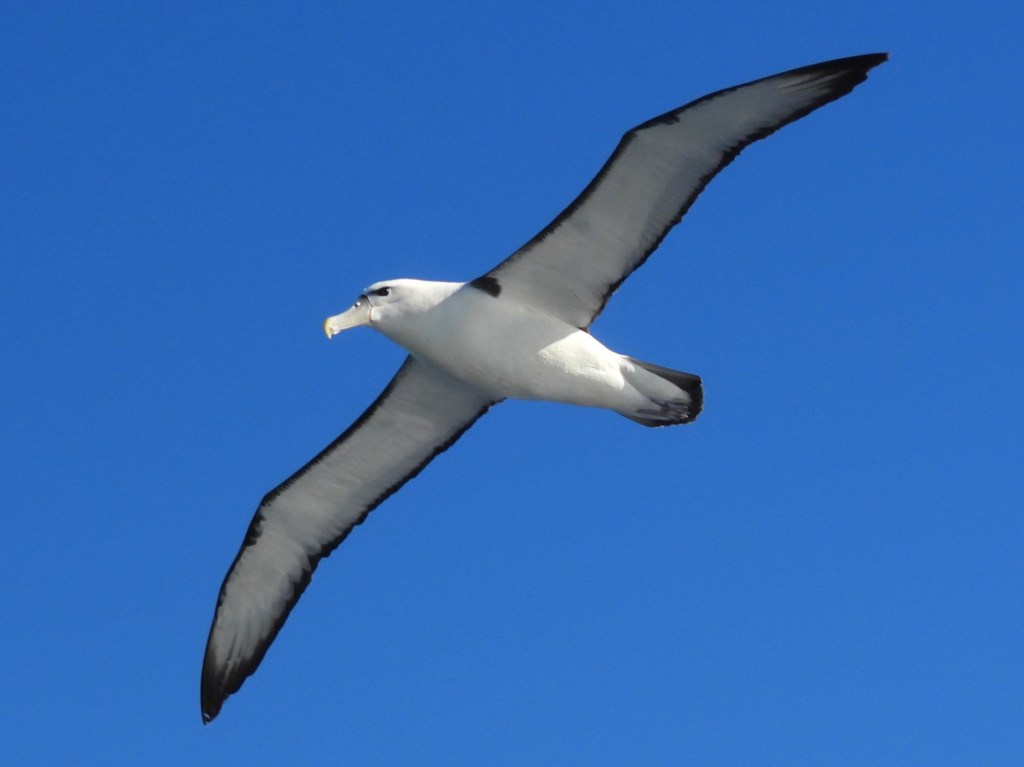
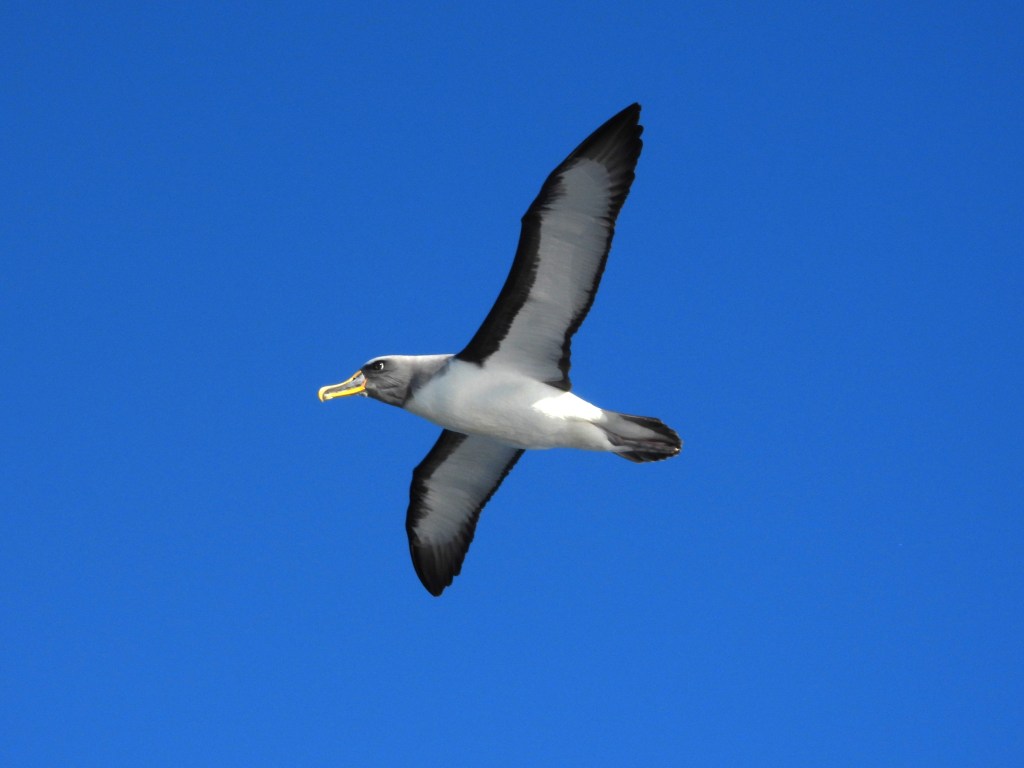
Then the first Buller’s Albatross turned up! It is a beautiful seabird and possibly my second favourite, after the Wandering Albatross.
We also encountered quite a few Wedge-tailed Shearwaters as we cruised along. As we got closer to the shelf, we were joined by Flesh-footed Shearwaters. Upon arrival over deep water, we commenced burleying, or chumming, to bring in the birds. We normally use a blend of ground beef suet and pet-grade chicken mince with a good dollop of tuna oil. The oil is pretty funky-smelling, and just a small capful on the water is enough to reach the sensitive seabird nostrils many kilometres away. On this trip, we used chicken skins and the oil, as well as fish scraps provided by the skipper.
In around 15 minutes, there were dozens of birds around the boat. Coming along to squabble over free food were:
-> Shy, Buller’s, Black-browed, Campbell and Yellow-nosed Albatrosses
-> Flesh-footed Shearwaters
-> Grey-faced Petrels
-> Wilson’s, White-faced and Grey-backed Storm-Petrels
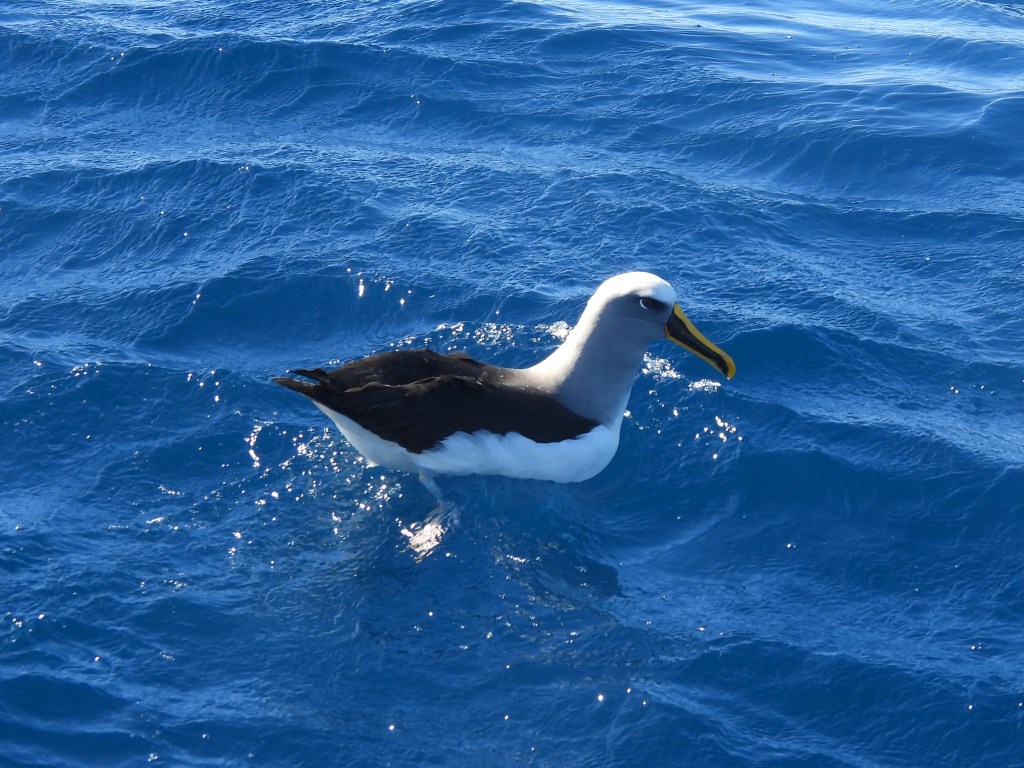
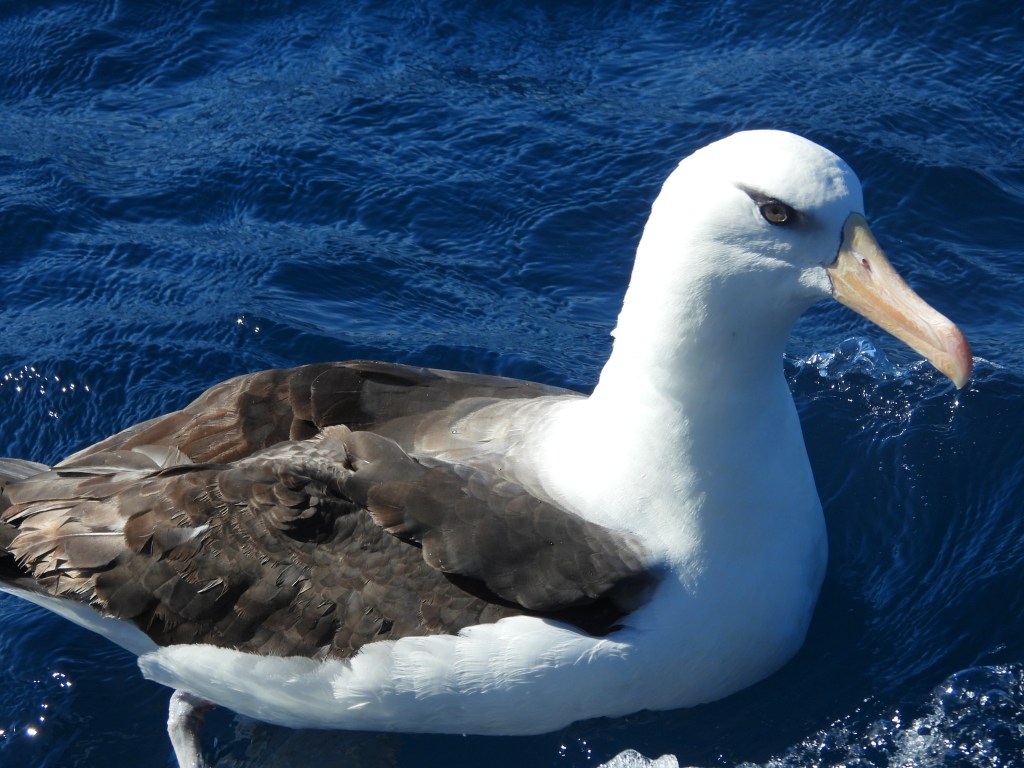
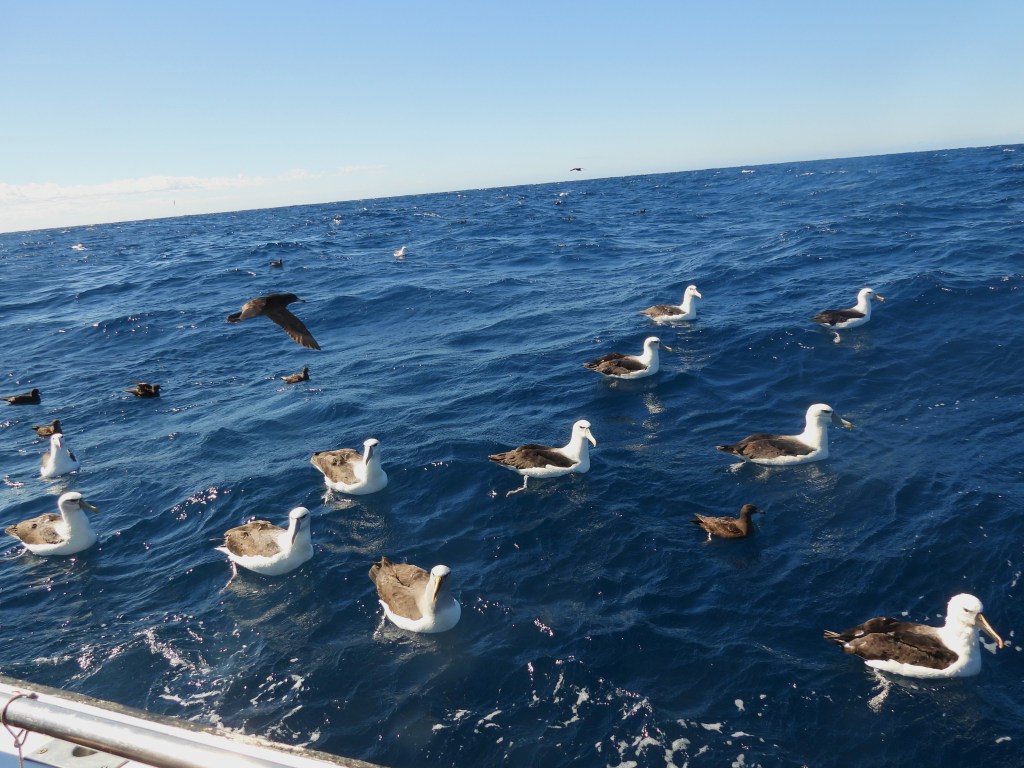
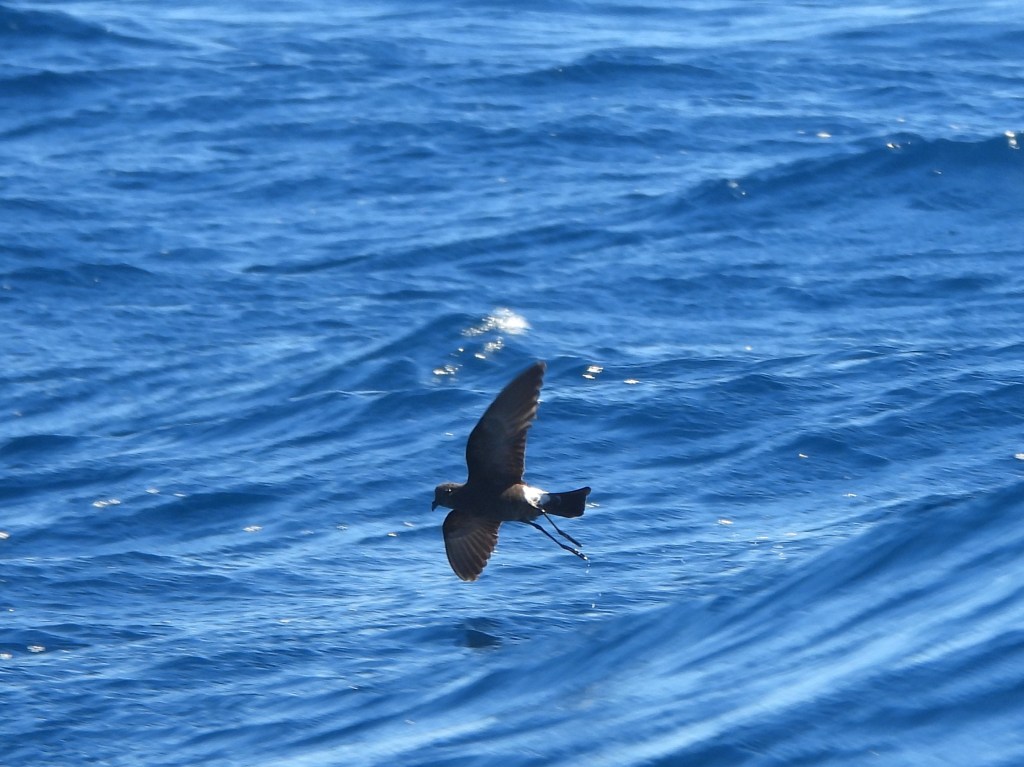
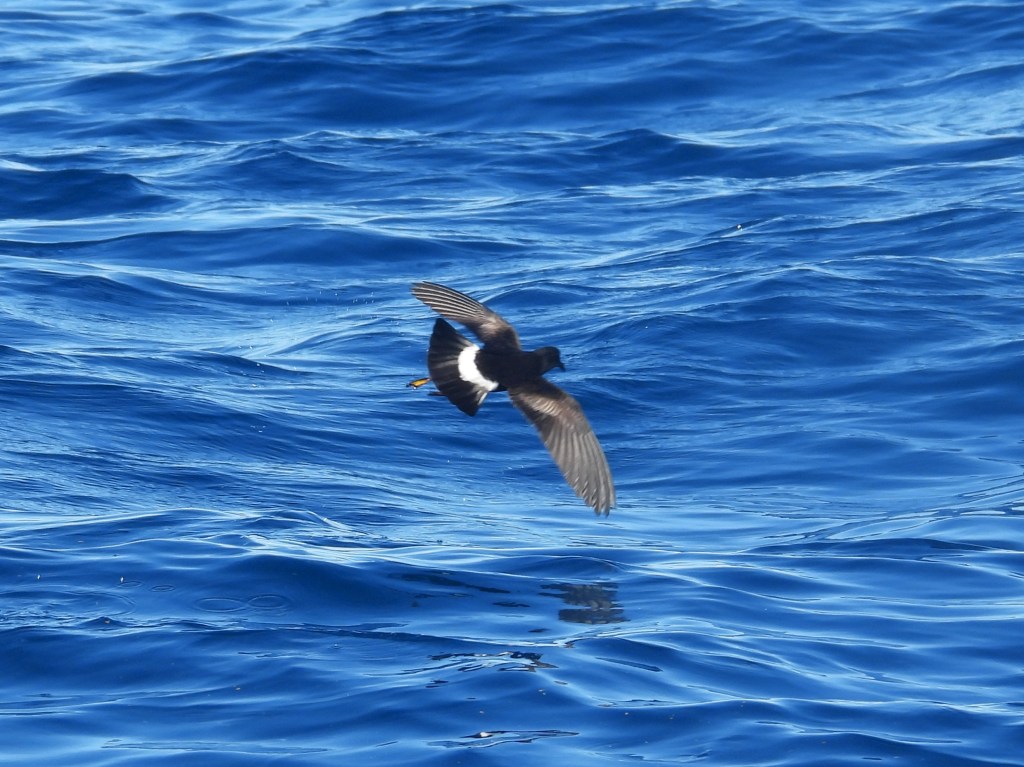
However, the best bird of the day, and a new species for most birders on board was the White-chinned Petrel. As the birds swam close to the boat, I yelled out to all on board that there was a Black Petrel with the White-chinned Petrels. I was the only birder to have seen one before. It was a new species observed for Julian, our trip leader! So, the Black Petrel became the best bird of the day!! As you’ll see in the photos, these birds are quite difficult to identify, especially as they zoom past 100 metres away, but even as they swim past almost within arm’s reach!
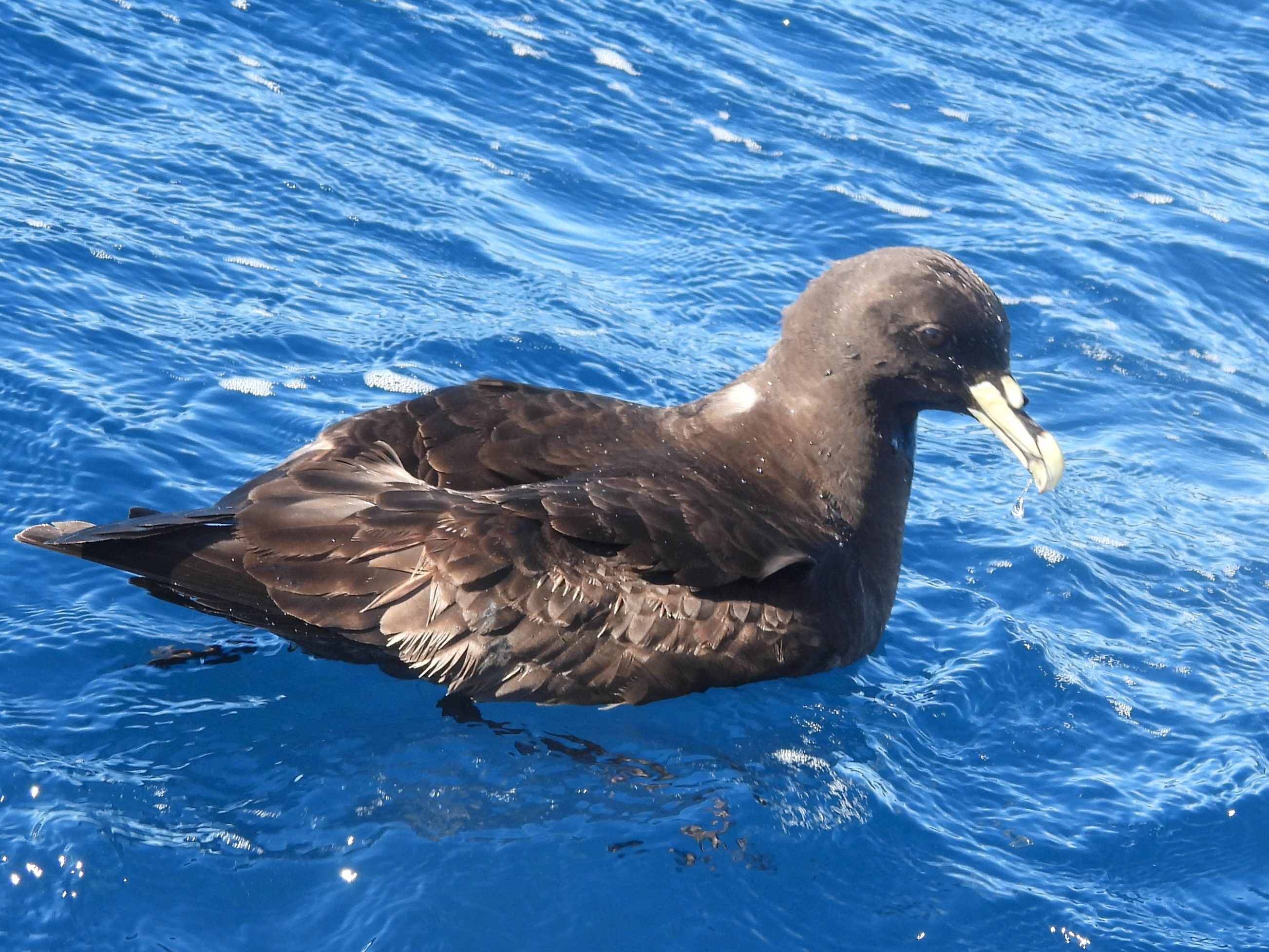
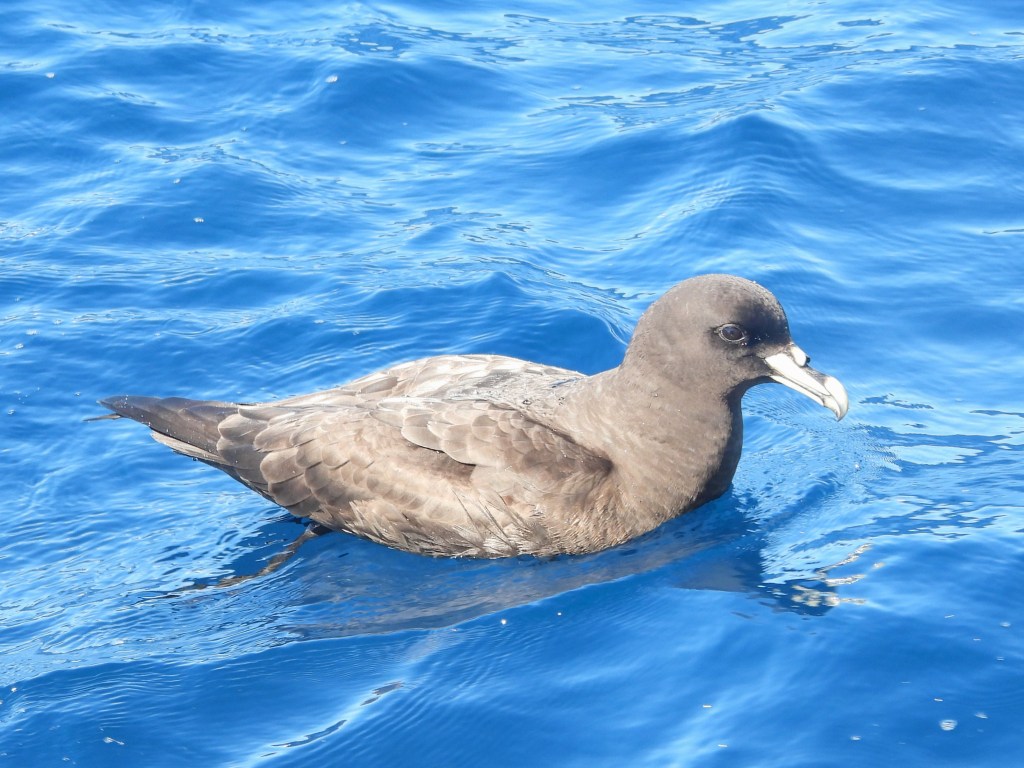
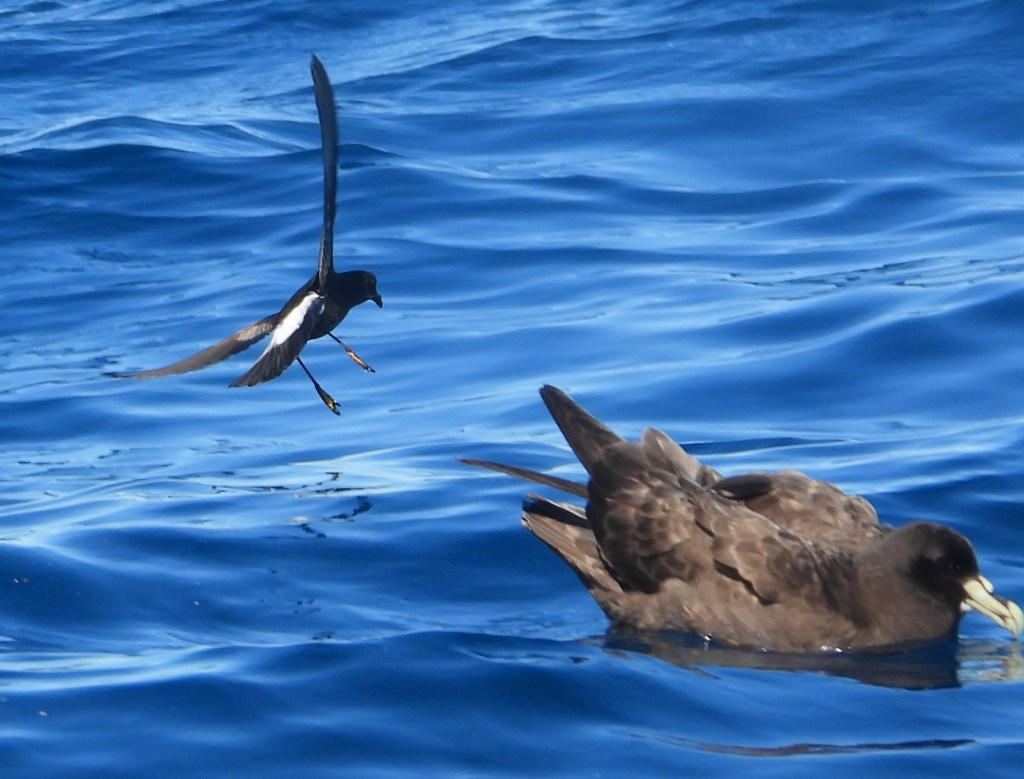
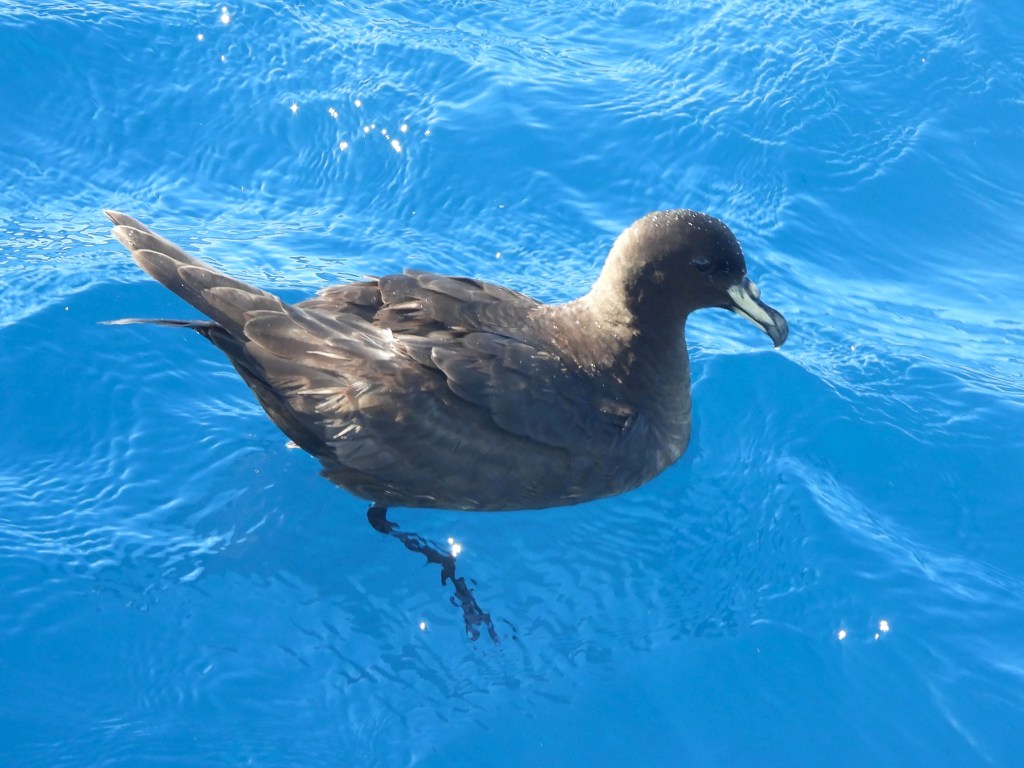
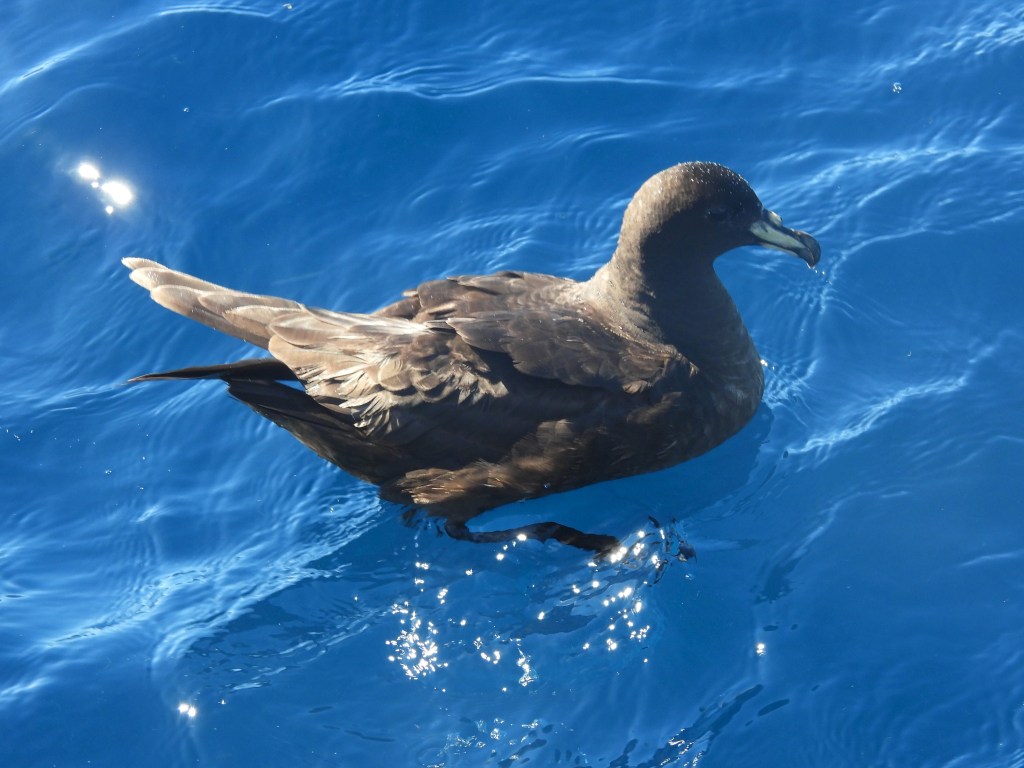
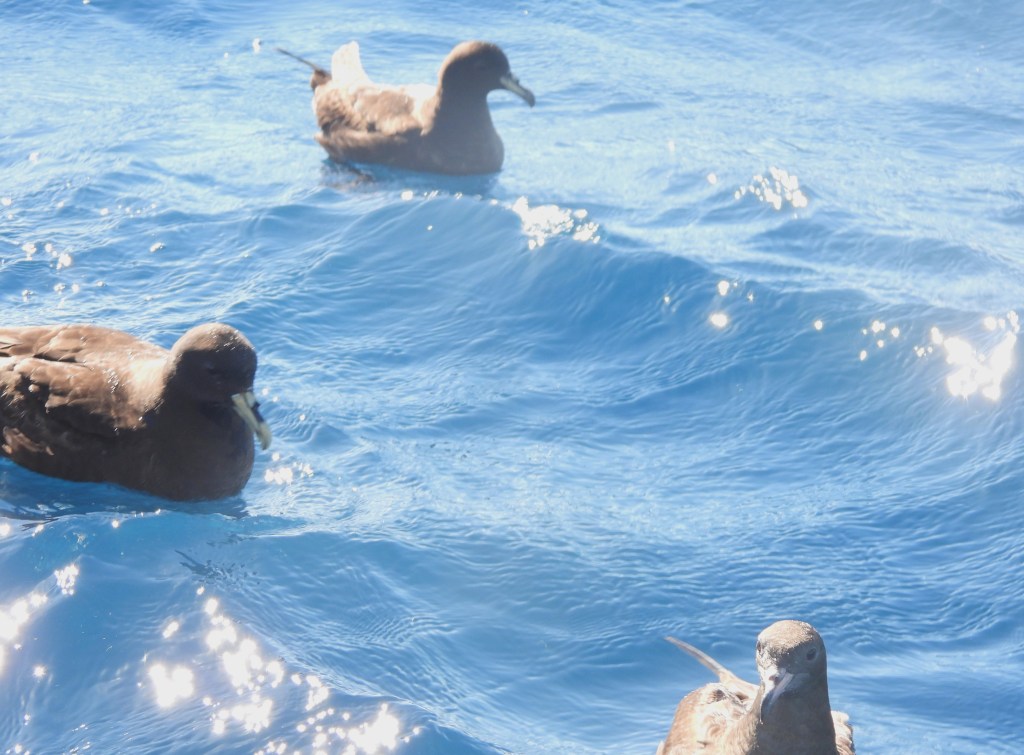
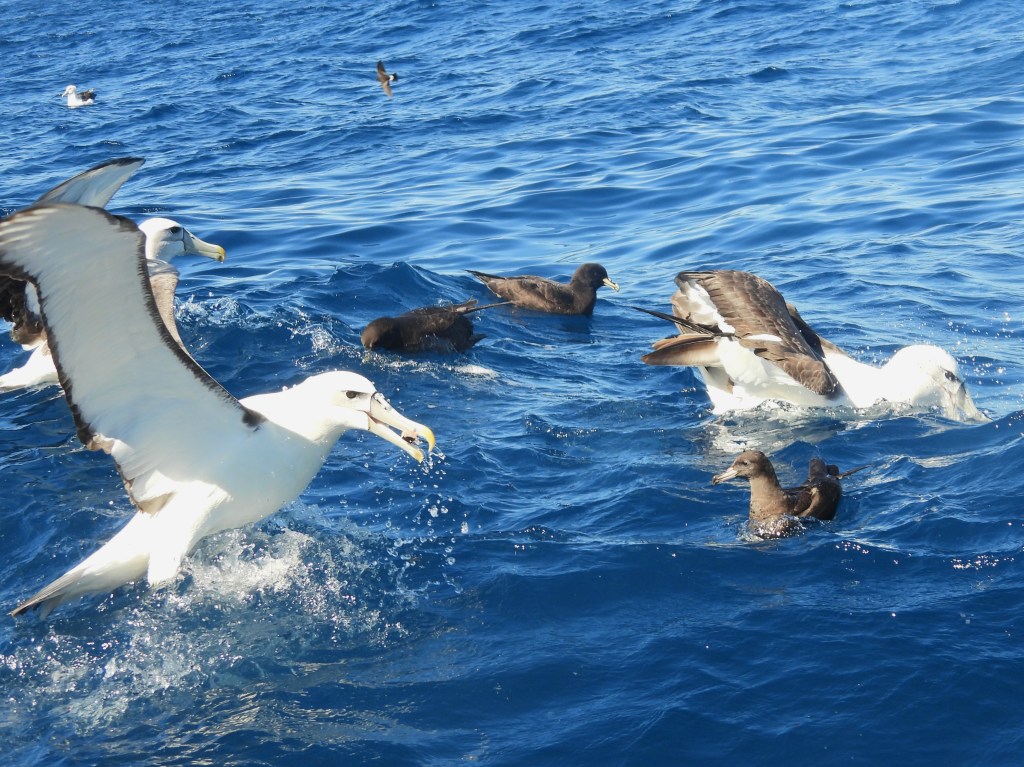
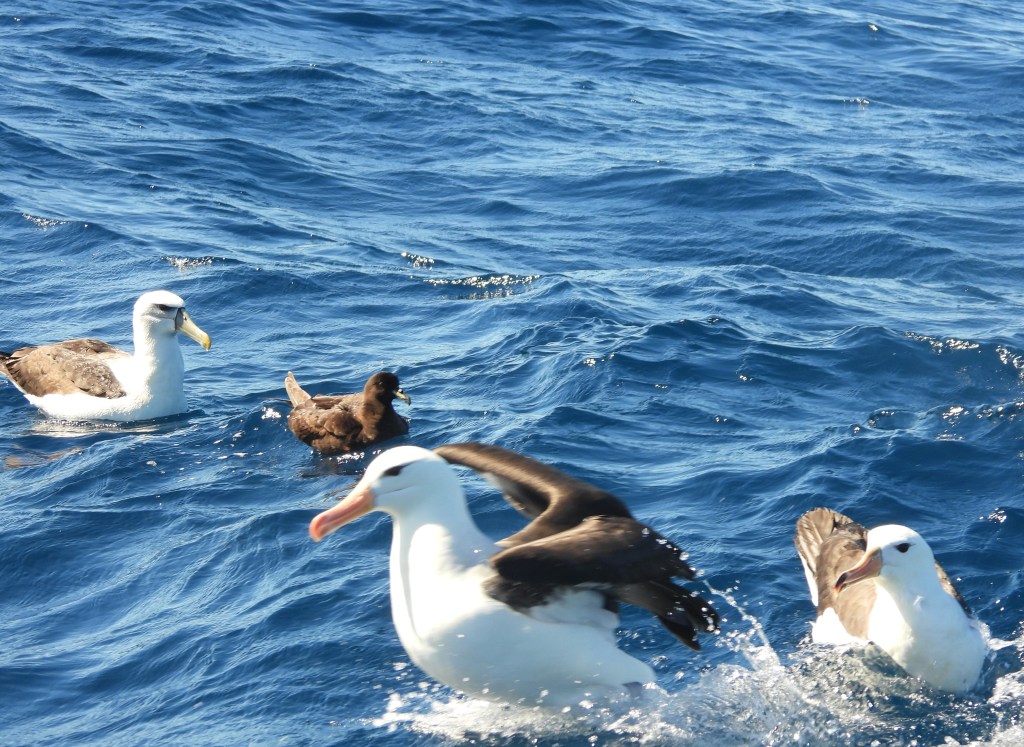
The ironic thing, or serendipitous perhaps, is that the Black Petrel is also known as Parkinson’s Petrel. What a cool bird to turn up for us on World Parkinson’s Day!
Parkinson’s Petrel (Procellaria parkinsoni) was described in 1862 and named for the Scottish botanical artist and collector Sydney Parkinson, who was employed by Joseph Banks to travel with him on James Cook’s first voyage to the Pacific in 1768, on HMS Endeavour.
Thanks for reading!
Anthony Overs
Canberra, Australia

