Welcome to a retrospective of my engagement with the natural world during the past year. This post was prompted by my friend Ian Fraser through a post on his wonderful blog.
Ian’s rules for his post were simple and flexible – post a photo from each month. However, a second photo may be necessary to tell a story, and photos may be borrowed from adjacent months.
Very much like Ian, I am not a professional photographer! Many photos I take are of chance encounters, using my phone’s camera. Those quickly taken snaps are sometimes shared on social media platforms or added to online databases for identification purposes.
Let’s dive in!
JANUARY
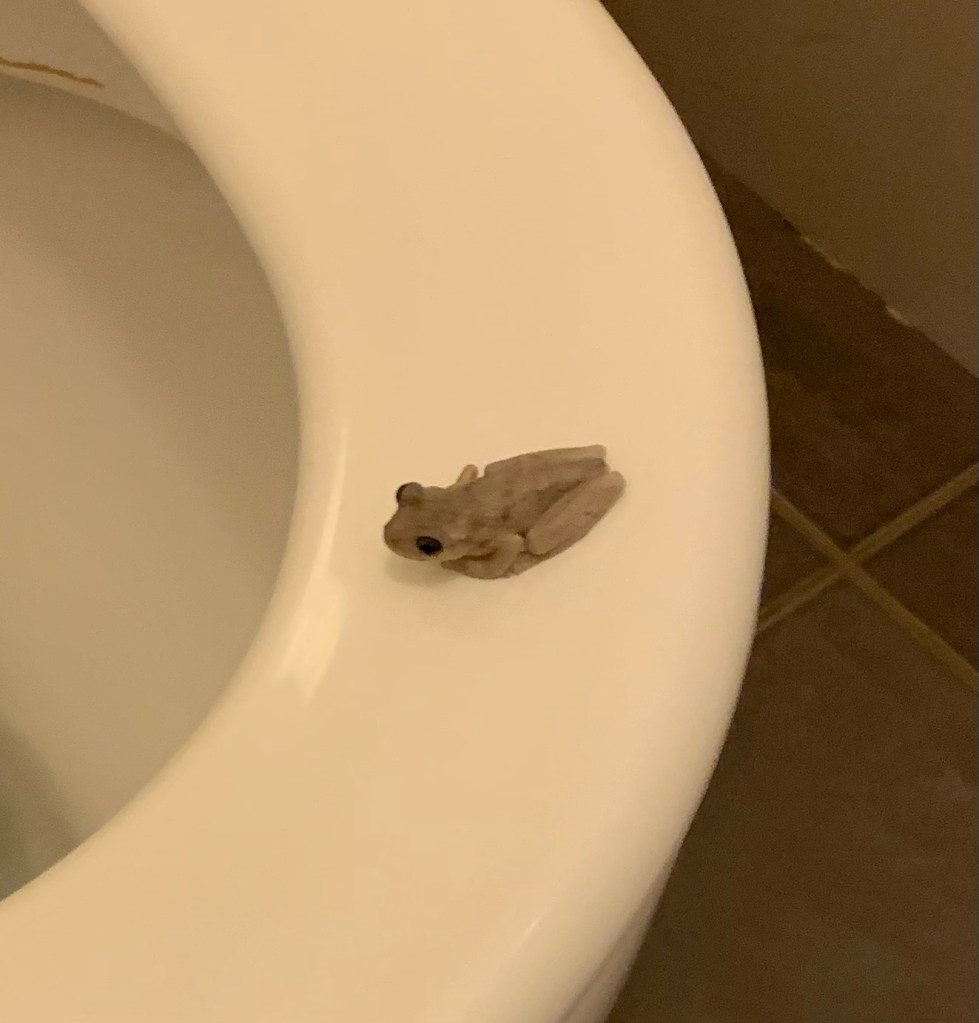
Peron’s Tree Frog, also known as the Emerald Spotted Frog (Litoria peronii). A resident species in our yard! I often hear one calling from somewhere outside the office window and more recently I heard one calling from a downpipe on the end of the house. During spells of heavy rain, I have encountered them on the front step and on a windowsill. This individual (which looked quite small so perhaps a sub-adult) was photographed sitting on the toilet seat. From memory, it had been quite warm, so it was simply seeking some humidity.
FEBRUARY
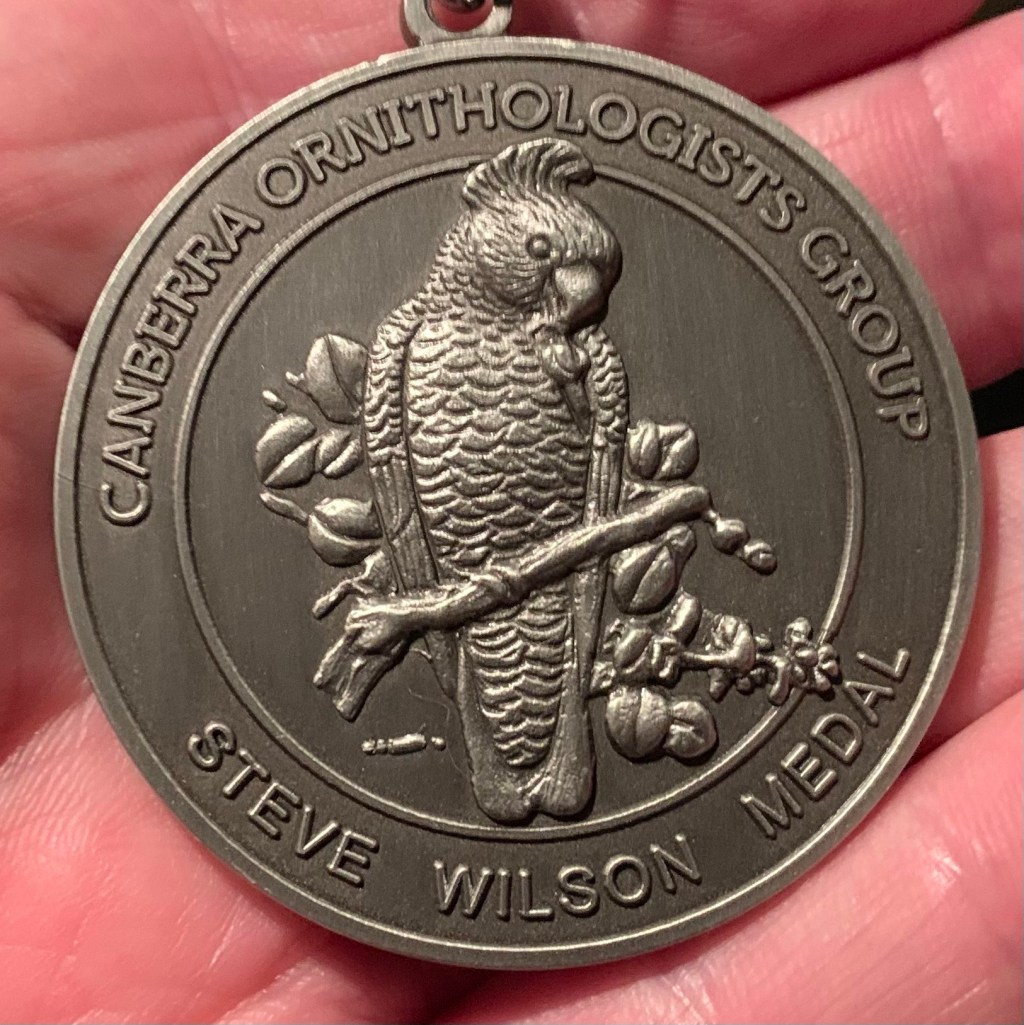
At the Canberra Ornithologists Group monthly meeting I had the honour of being awarded the Steve Wilson Medal for 2023. Information about the medal is here. I was absolutely thrilled to be given this award. One of the hardest things I’ve had to do is not tell anyone about it for around four months!!
MARCH
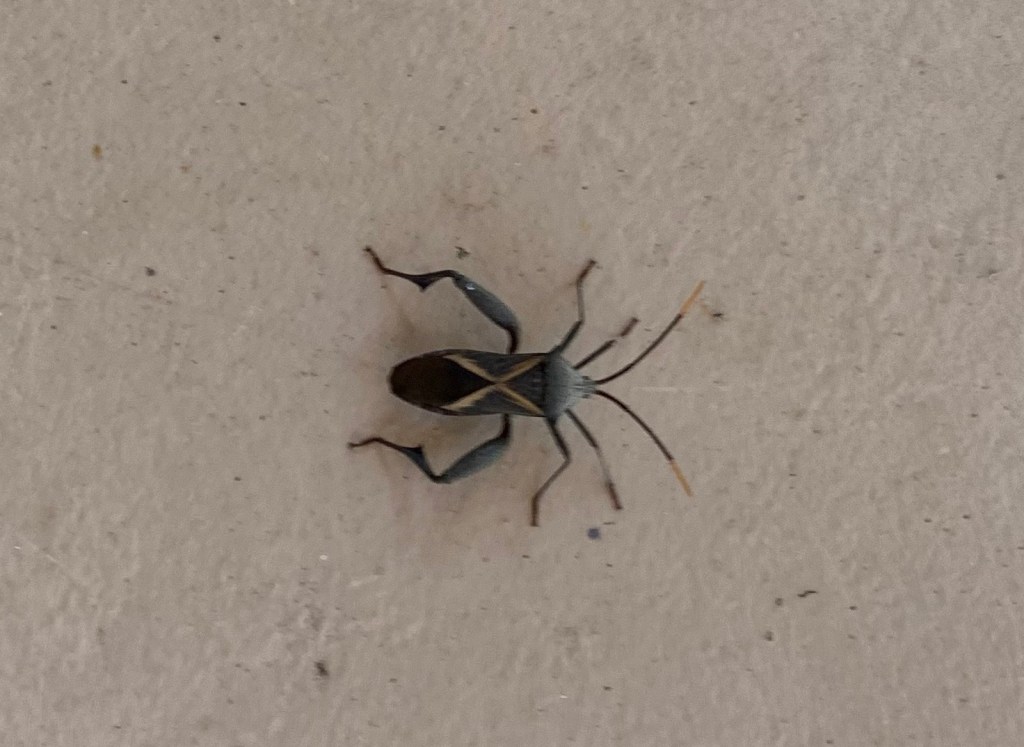
A new beast at home, seen crawling across the front veranda. It’s a Crusader Bug (Mictis profana), so named for the saltire or cross on the wings which is similar to the cross on Crusaders’ shields. A most excellent explanation of the wing structure is here, which saves me clumsily describing it. Crusader Bugs can be an agricultural pest.
APRIL
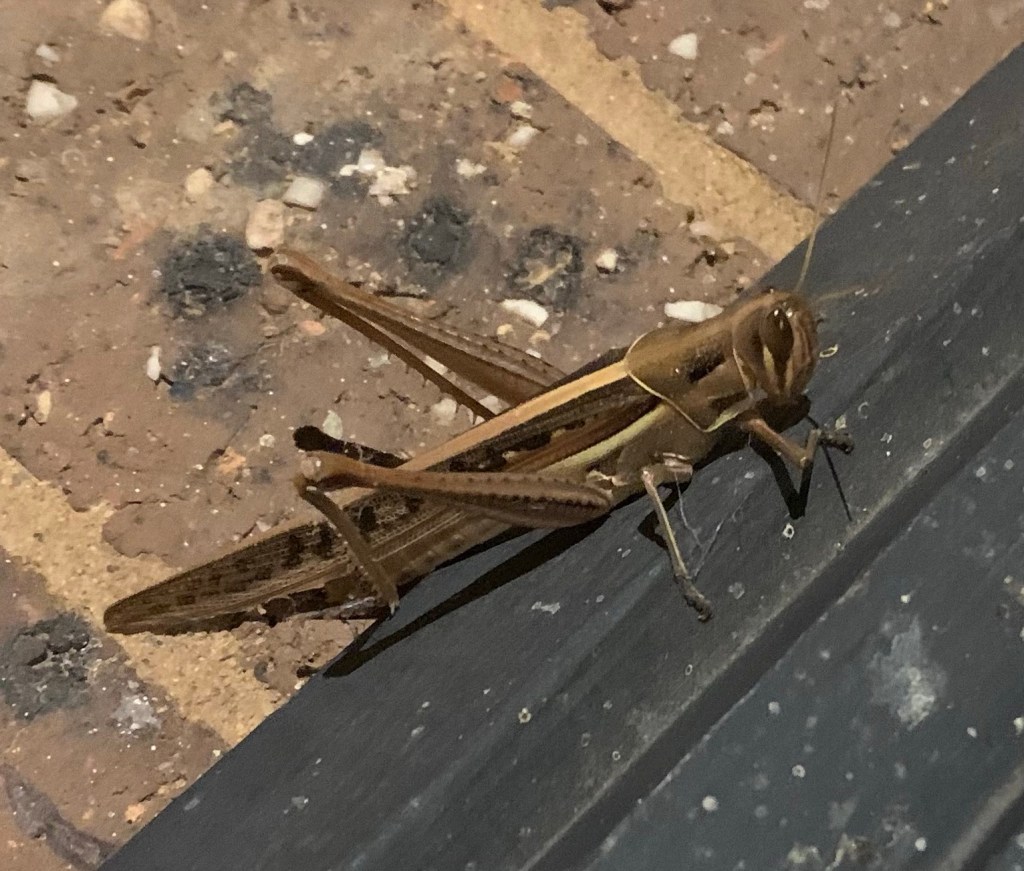
A Spur-throated Locust (Austracris guttulosa) sits on the window sill after smacking into the glass. It hit the window so hard, I thought someone had thrown a rock at the house. Its identity was confirmed by an expert on Canberra Nature Map. It seems that there was an influx of this northern species at the time with plenty of observations and records around the Canberra area.
MAY
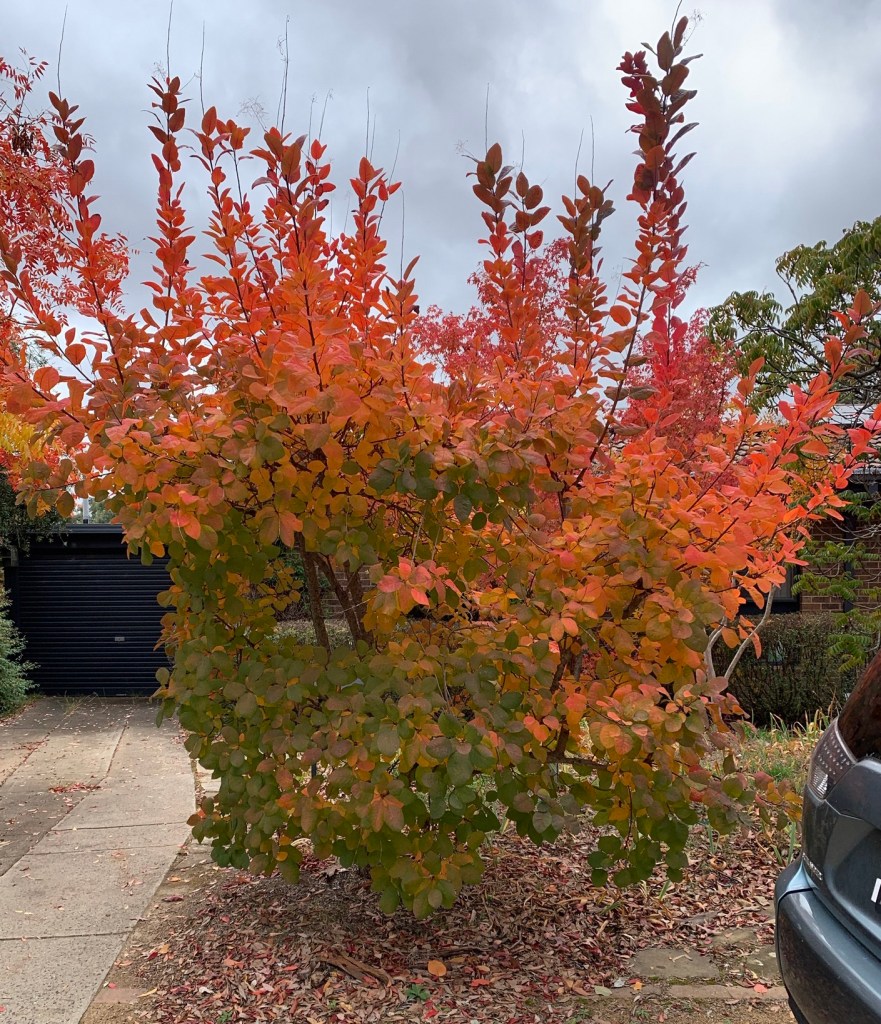
Late autumnal colours of a Smokebush (genus Cotinus) in our front yard. The colour palette is beautiful, moving from a burgundy red at the top through the flame orange and dusty gold, down to the wheelie bin green at the bottom. We often get passers-by telling us how lovely the shrub is, when it flowers and when the leaves change!
JUNE
The big blue paddock. I love the ocean and pelagic birding, and the MV Connemara (out of Eden) is one of my favourite places to be. I could not decide which photo from the trip to post, so I went with this video. It shows great examples of albatrosses circling around, flying into the wind, and dropping their wings and feet to help them stop and drop to the water. I was going to write that they “land on the water” but there is no land and to “water on the water” is just silly!
JULY
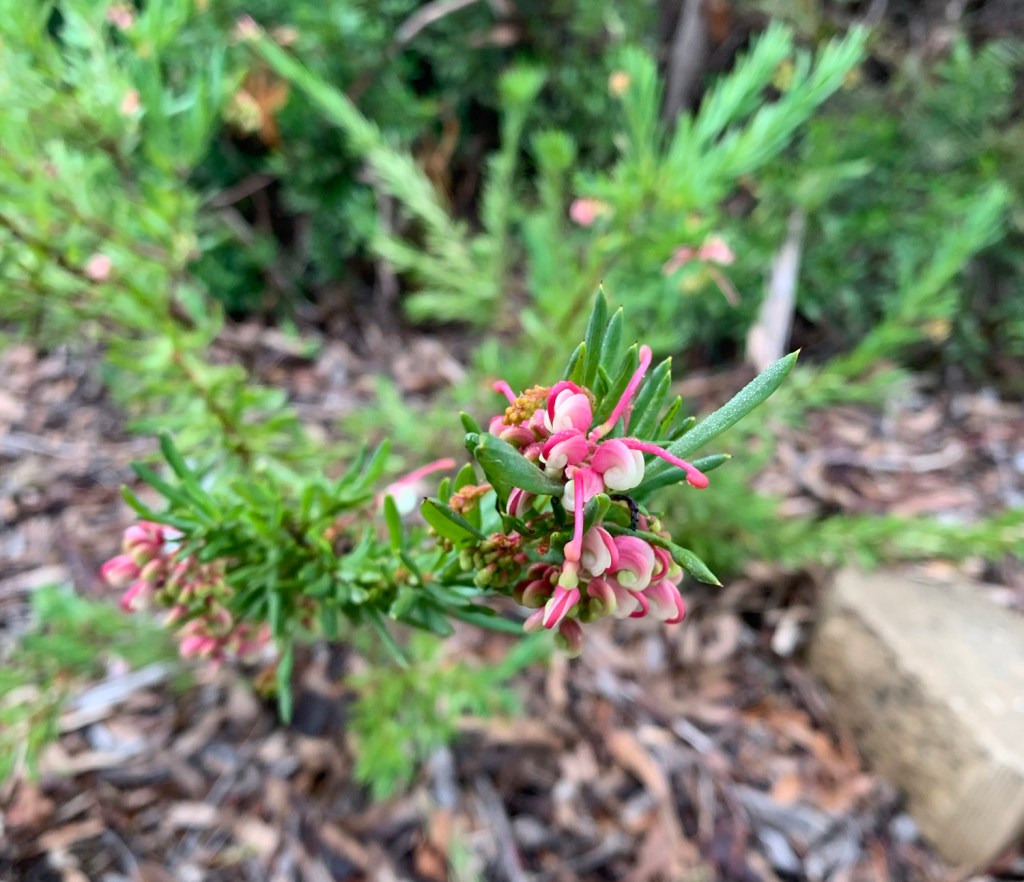
The Wee Jasper Grevillea (Grevillea iaspicula) is an endangered species found in limestone rocky outcrops in a very restricted area near Wee Jasper and Lake Burrinjuck, NSW. I bought this licensed plant from a local nursery that specialises in local, cool climate natives. I have managed to keep it alive and growing for two years. It had only been in the ground for about half an hour when my resident Eastern Spinebills found the flowers!
AUGUST
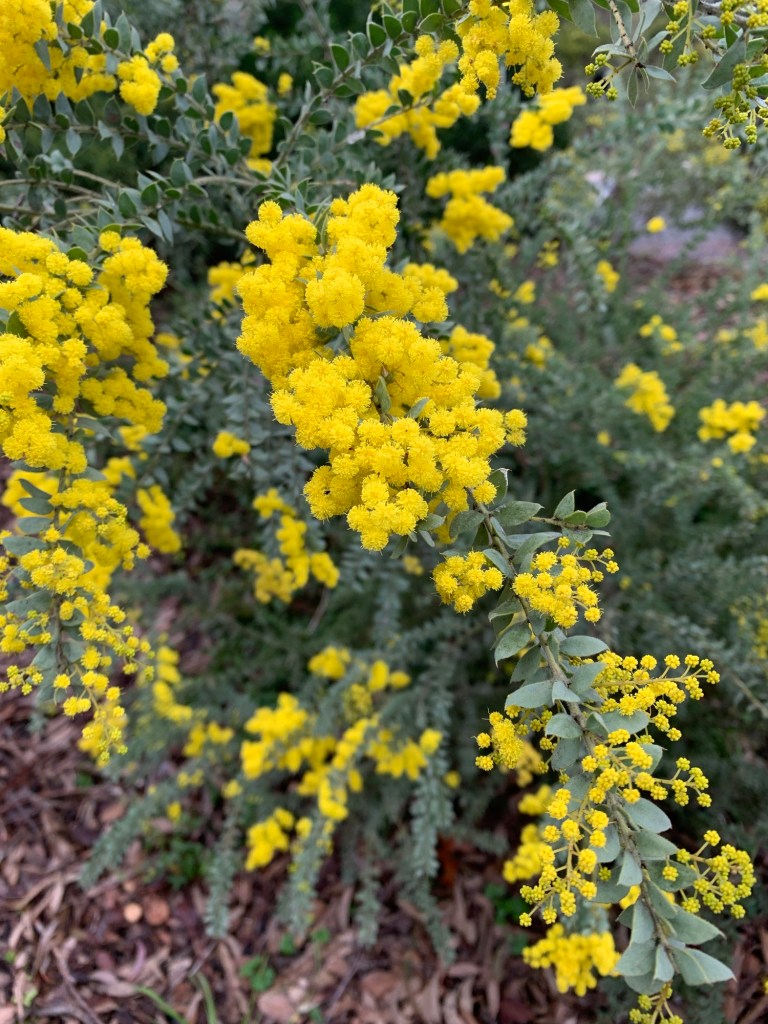
Another cool climate native I’ve planted in my garden. This one is Acacia vestita which goes by the common names of weeping boree, weeping acacia, or hairy wattle. It has grown quite quickly and flowered profusely this spring.
SEPTEMBER
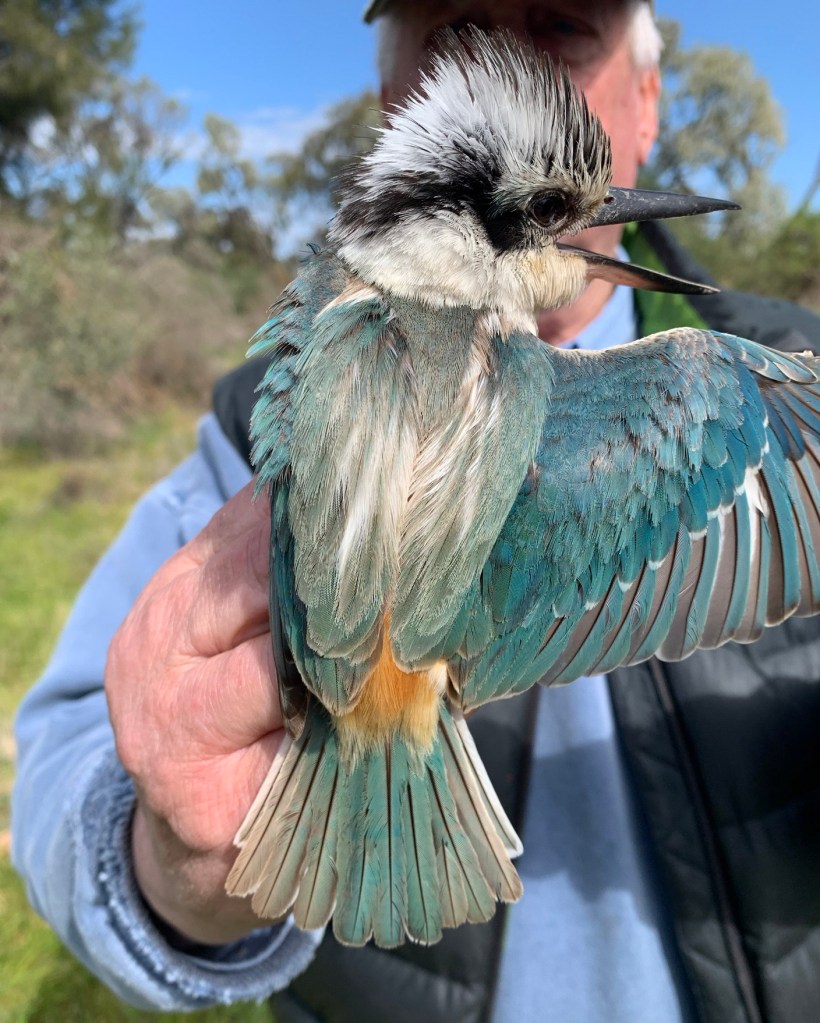
For the first time in about six years, I managed to get out on a bird banding weekend. Prior to brain surgery 18 months I simply could not consider a weekend in the field. Now I can do it, albeit with assistance from my son! We were at Ungarie in central western NSW at a site where the crew is working on a Painted Honeyeater project. Plenty of other species to band too, including the pictured Red-backed Kingfisher (Todiramphus pyrrhopygius) which was a new species banded for me!
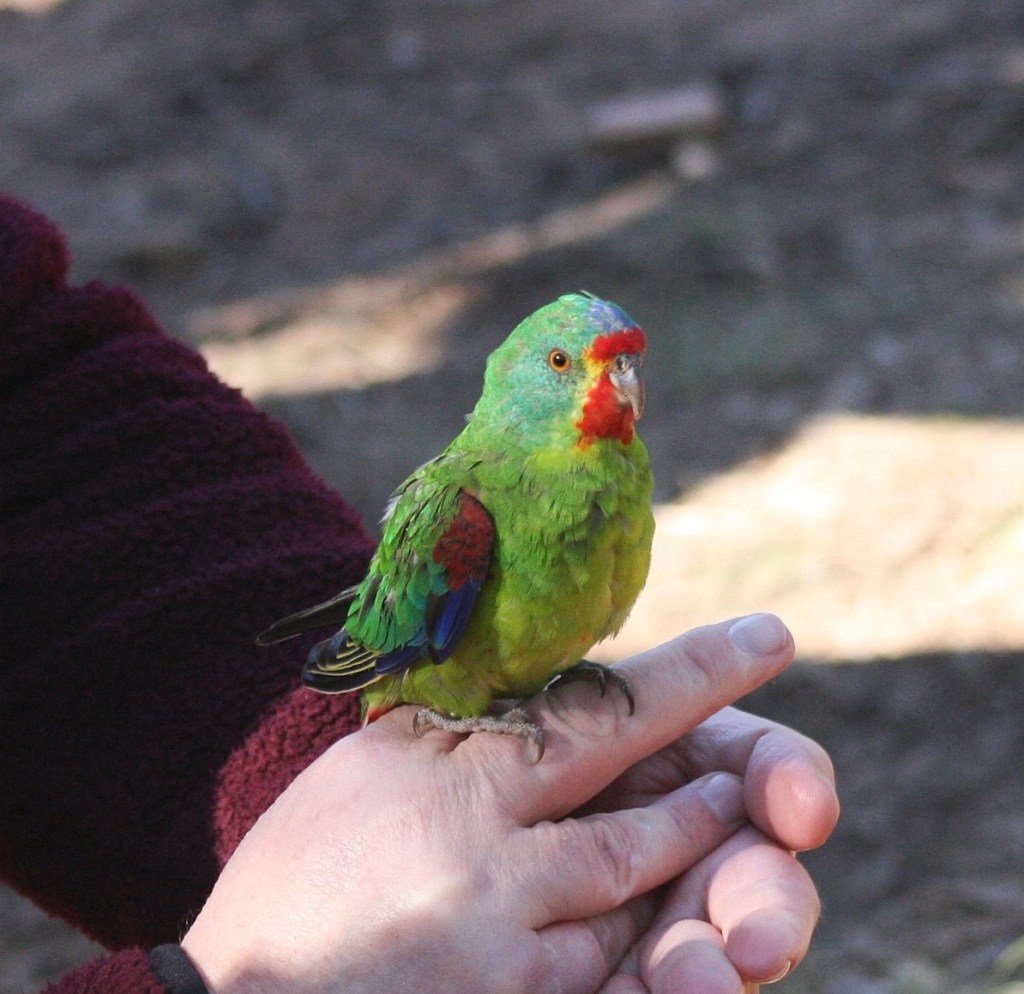
Just a week after the Ungarie trip, my son and I were out at Richard’s banding site next to the Weddin Mountains National Park. Another most excellent weekend in the field. With more than 20 years of experience, I am still able to contribute to banding operations through instructing trainees. My days of trudging around net sites for more than ten kilometres a day are done though! Plenty of great birds on this particular weekend, including the pictured Swift Parrot (Lathamus discolor). It was a privilege to be able to hold this bird while Richard banded it. After I processed the bird I let it go, it jumped up onto my fingers and sat there for about a minute before flying off. Many photos were taken, including this one by my son. This critically endangered bird is in deep trouble as its breeding habitat in Tasmania is still being removed. The population size is conservatively estimated at around 2,000 individuals, with some experts estimating only 300-500 birds. It may be extinct in my lifetime.
OCTOBER
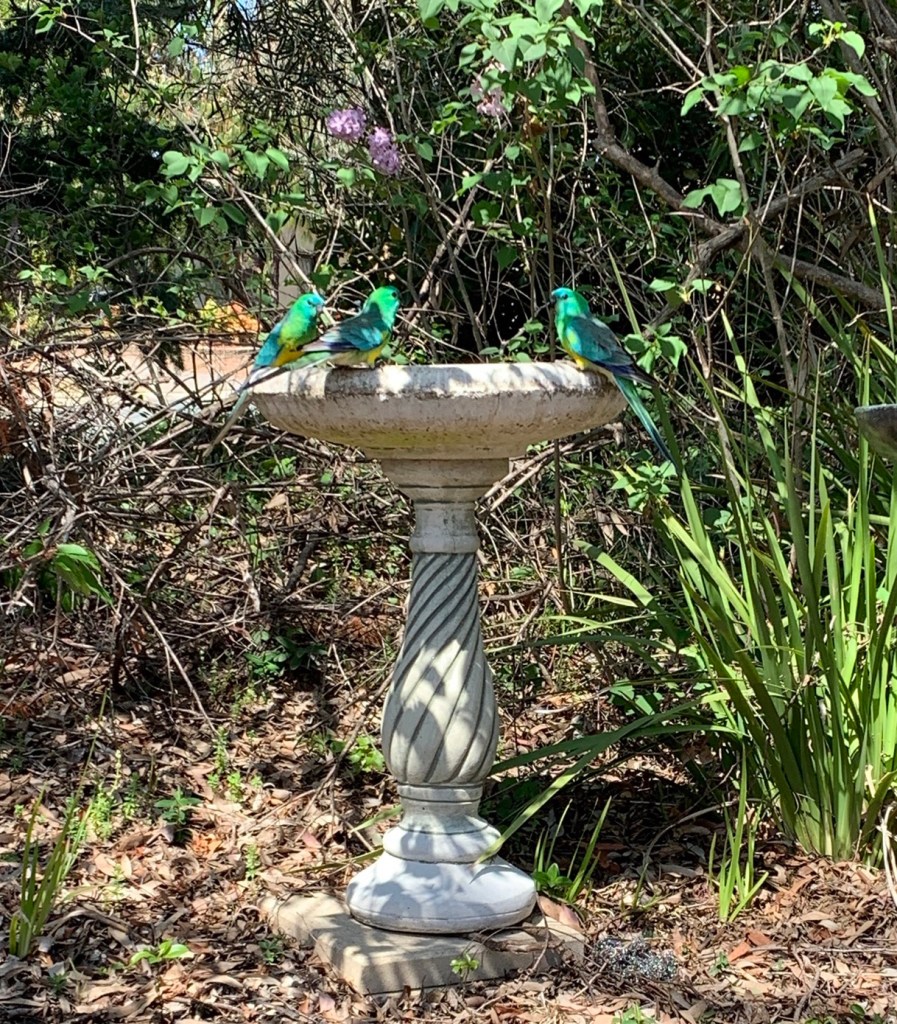
The lads come in for a drink! Three male Red-rumped Parrots (Psephotus haematonotus) on one of the bird baths in my front yard. Photo hastily shot on my phone through the window. I think there were six or seven males present at the time. For many years now, I have had quite a few pairs of these lovely parrots come to my baths to drink multiple times a day. The birds breed in hollow-bearing trees in nearby woodland and fly down my street and into the suburb where they feed on grass seeds on the playing fields. When the females stop coming to the bath tells me that they are in nest hollows on eggs and then nestlings. After a few weeks, the females begin to reappear as the nestlings are big enough to be left alone for a while. Then the young fledge and come along with the adults! Water is the best thing you can provide for birds in your garden.
NOVEMBER
At the end of November, my son and I made the trek down to Deniliquin to join Phil Maher for a birding tour centred around seeing Plains Wanderers (more on that tour will come in a brief post soon). I was pleasantly surprised to learn that a species of frog that has eluded me for many years was out and about in the region. The Holy Cross Frog or Crucifix Toad (Notaden bennettii) spends most of its life deep underground, emerging from its burrow after heavy rain to breed. With heavy rain in the previous weeks in the area, the frogs were out doing their thing. The frog is only small, maybe five centimetres long. The field guide describes it as a colourful ping pong ball as it bounces along, hopping on very short limbs. The individual in this photo is next to a work boot for size comparison!
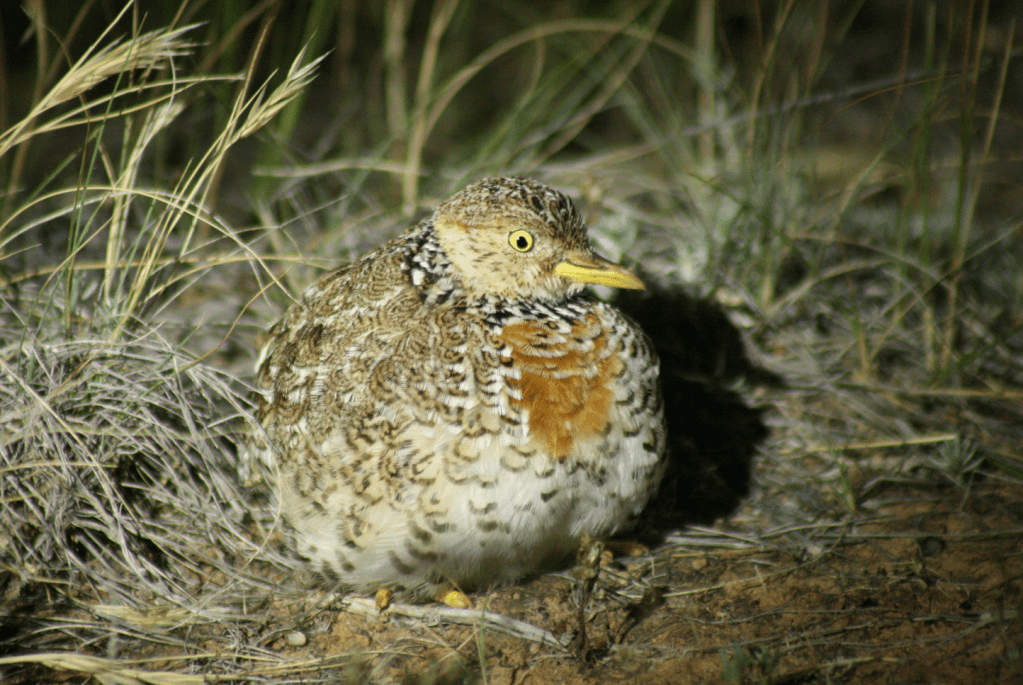
Yes, we did find Plains Wanderers (Pedionomus torquatus). Pictured is a female crouched down in the cool, strong winds. The banner photo for this post shows the sun setting over open grassland habitat where the critically endangered Plains Wanderer can be found.
DECEMBER
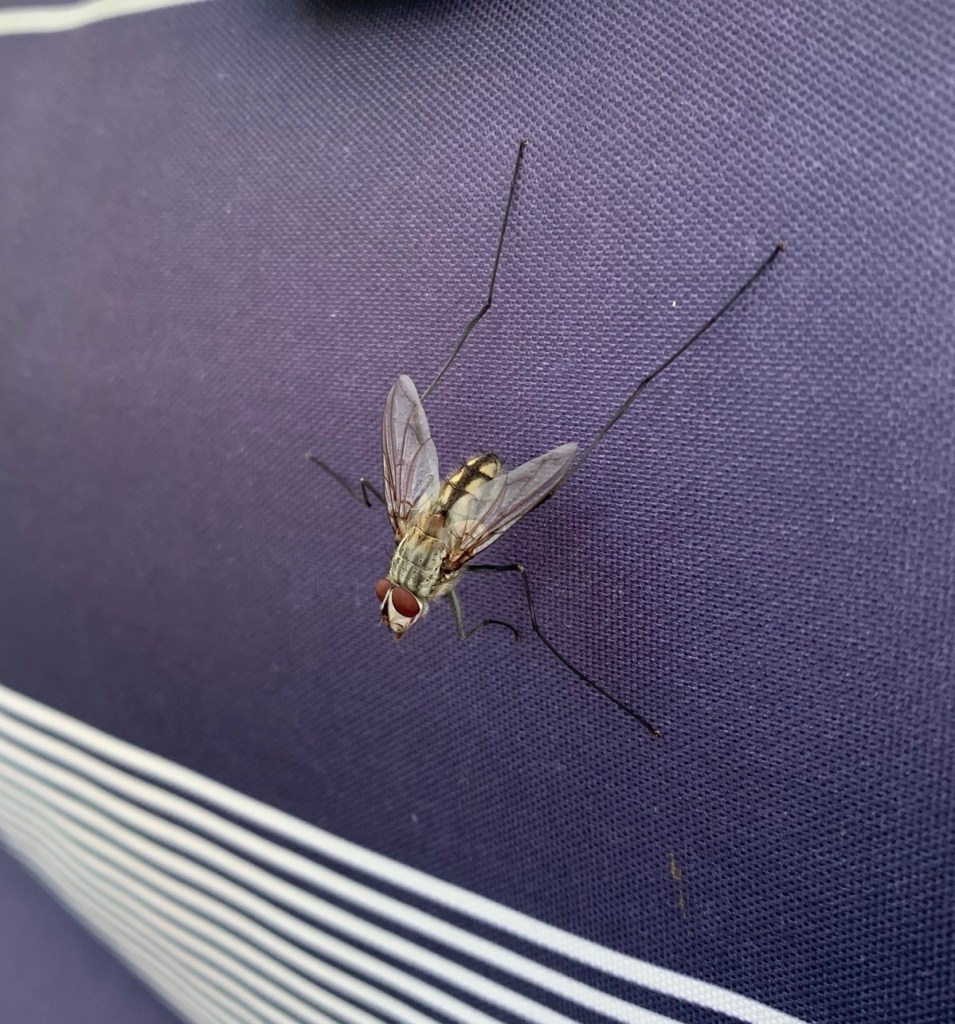
The Long-legged Tachinid (genus Senostoma), a species of parasitoid fly. This thing was buzzing around me as we sat down to Christmas lunch, near Armidale NSW. I thought it was a March fly, but it landed on the back of the chair showing the enormous legs! Fortunately, my cousin James and his wife Manu live nearby, and Manu happens to be an insect expert! Tachinid larvae develop inside a host, exclusively beetles (usually larval stage Scarabaeidae), consuming and killing the host in the process.
Well, that’s a wrap for 2024. I hope you enjoyed these photos and associated stories. Please do leave a comment! Thanks again to Ian for the inspiration. Best wishes to you all for 2025.
Thanks Ant, I am rapt that you took this on! I hope that you enjoyed doing it as much as I do mine, and maybe the idea will spread… Love your selection, especially the focus on the ‘little ones’. You’ve reminded me of the time up at Bowra Station when I had to get the bus out quickly with rain coming, and was constantly driving around the Crucifix Toads coming up out of the soil and crossing the road. That was a first (and hitherto only) encounter for me too. Lastly, I like your point about the silliness of ‘landing on water’; how about ‘alighting’? Thanks again. IF




Thanks Ant, I am rapt that you took this on! I hope that you enjoyed doing it as much as I do mine, and maybe the idea will spread… Love your selection, especially the focus on the ‘little ones’. You’ve reminded me of the time up at Bowra Station when I had to get the bus out quickly with rain coming, and was constantly driving around the Crucifix Toads coming up out of the soil and crossing the road. That was a first (and hitherto only) encounter for me too. Lastly, I like your point about the silliness of ‘landing on water’; how about ‘alighting’? Thanks again. IF
LikeLike
Excellent photos Anthony and congratulations on being awarded the special medal. Well deserved. Nice to see a new edition to your eclecticantics.com
LikeLike